Watch 101
How Many Watches Do You Need? Building a Three Watch Rotation
 Daniel Reyes·5 min read
Cost per wear is the most common argument for buying an expensive watch, and it cuts both ways. We set out the formula, run honest examples for luxury, entry Swiss and affordable watches, and give you a calculator to run your own.
Prices checked October 9, 2026Compared across brandsHow we choose

Anyone who has talked themselves into an expensive watch knows the argument. "I will wear it every day for twenty years, so really it costs pennies." It is not wrong. Cost per wear is a sensible way to think about anything you use daily, from shoes to a coffee machine. But the argument is usually run once, in one direction, with the most flattering numbers. Run honestly, it says something more interesting: that how often you wear a watch matters more than what it costs, and that the answer changes completely depending on what kind of watch owner you are.
WatchesUnder is owned by BlackRobin Capital Inc.
Cost per wear is the total cost of owning the watch, divided by the number of times you wear it. The total cost has four parts:
The number of wears is days per week times weeks times years. Five days a week for ten years is 2,600 wears. Twice a week for three years is 312.
The calculator below does the arithmetic. Choose a luxury price level, set how many years and how many days a week you expect to wear it, add servicing and insurance if you want them counted, and compare against four affordable watches. Every assumption is on screen and editable, so you can test the case for and against.
Take an integrated bracelet steel sports watch at the top of the market, from about $13,500 at retail. Suppose you wear it five days a week for ten years: 2,600 wears. Before servicing, insurance or resale, that is just over $5 a wear.
Now suppose, purely as an illustration, that you could sell it after ten years for $10,000. Your net cost is $3,500, or about a dollar and thirty five cents a wear, before servicing and insurance. That is the version of the argument people quote. It depends entirely on two assumptions: that you really will wear it most days for a decade, and that the resale value holds. The first is up to you. The second is not, and it applies to a small number of references, not to luxury watches in general.
If the resale value falls, or if the watch ends up worn twice a week because you bought others, the figure rises quickly. At two days a week with no resale, the same watch costs about $13 a wear over ten years.
The Tissot PRX Powermatic 80 40mm costs $850. Worn five days a week for ten years, with no resale value assumed at all, it costs about 33 cents a wear. This is the example people forget when they run the argument for luxury: a good entry level automatic worn daily is very cheap per wear, without depending on resale or on market conditions. It still needs servicing, which the calculator lets you add. Our guide to affordable luxury watches covers this tier.
The Lucky Fours Caspian costs $79.99. Worn twice a week for three years, a more modest assumption, it costs about 26 cents a wear, with no resale and no servicing beyond a battery. Worn for a single year at one day a week, which is the worst case for a watch that ends up in a drawer, it is about a dollar and a half a wear, still in the same range as the luxury watch's best case.
The affordable watch wins on a different measure too: risk. If you stop wearing it, you have lost $79.99. If you stop wearing a $13,500 watch, you have to sell it, and you take whatever the market offers that year.
WatchesUnder is owned by BlackRobin Capital Inc.
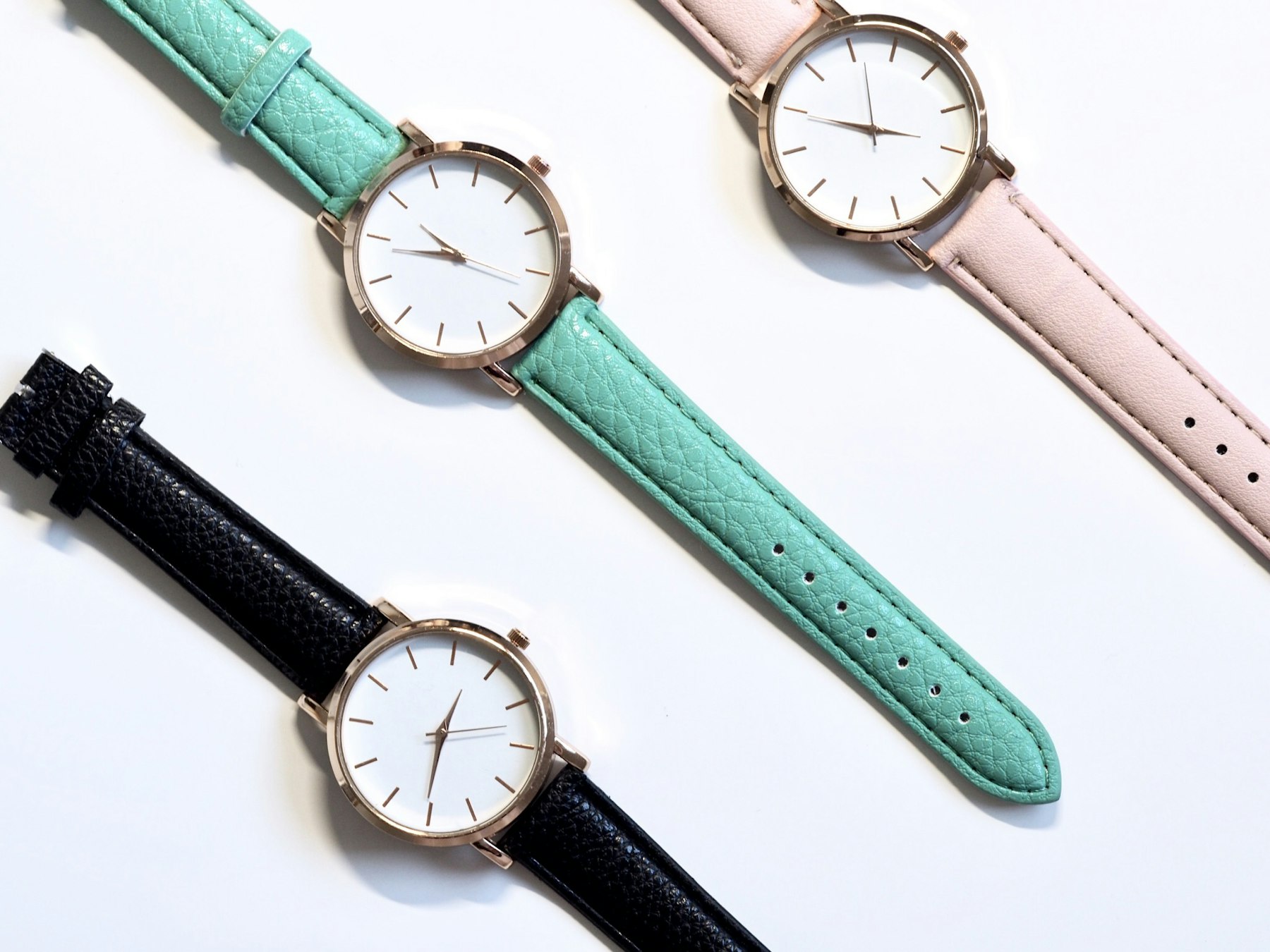
Most people who like watches do not wear one watch. They wear two or three, and that is where cost per wear gets most interesting. Under the Lucky Fours buy one, get one free offer with mix and match, a Santos and an Oceanus cost about $129.99 together, with the free item applied according to the store terms. Wear them on alternate days, five days a week, for five years, and the pair has been worn 1,300 times: about 10 cents a wear, for two watches with different jobs, a dress watch and a sports watch.
Add an automatic such as the Spine at $149.99 for weekends, worn three days a week for five years, and it comes to about 19 cents a wear on its own. The case for a small rotation is made in how many watches you need.
| Example | Price* | Wears | Cost per wear |
|---|---|---|---|
| Luxury steel sports watch, no resale | about $13,500 | 5 days a week, 10 years | just over $5 |
| Same, if resold for $10,000 (illustration) | about $13,500 | 5 days a week, 10 years | about $1 and 35 cents |
| Same, worn twice a week, no resale | about $13,500 | 2 days a week, 10 years | about $13 |
| Tissot PRX Powermatic 80 40mm | $850 | 5 days a week, 10 years | about 33 cents |
| Lucky Fours Caspian | $79.99 | 2 days a week, 3 years | about 26 cents |
| Santos and Oceanus pair | $129.99 | 5 days a week, 5 years | about 10 cents |
*as listed on each brand's US website, October 2026. Luxury prices rounded. Servicing and insurance excluded; add them in the calculator.
WatchesUnder is owned by BlackRobin Capital Inc.
Cost per wear treats a watch as a utility, and it is not only that. A luxury watch can carry meaning that no calculation captures: a milestone, an inheritance, the pleasure of fine finishing. If that matters to you, the maths is a side issue, and we would not try to talk anyone out of it. Equally, the pleasure of variety, a different watch for different days, is real, and it is something a single expensive watch cannot give you.
What the numbers do show is that the strongest argument for an expensive watch, that it costs little per wear, depends on wearing it constantly and on a resale market you do not control. The affordable route is cheaper in total under almost any assumption, and per wear it is competitive unless the expensive watch is worn nearly every day for many years. For the looks themselves and what they cost at each level, see seven luxury watch looks for less, and for the full price ladder, what a good watch actually costs.
WatchesUnder is owned by BlackRobin Capital Inc.
Take what the watch costs you in total (price, plus servicing and insurance, minus what you could sell it for at the end) and divide by the number of days you will wear it. The calculator in this article does it for you.
A small number of popular references from a few brands have held or gained value in recent years. Most luxury watches sell secondhand below their retail price, and many fashion and entry level watches have little resale value at all. Never assume a watch will appreciate.
Per wear, one expensive watch worn daily for many years can come out surprisingly close to several affordable ones. In total spending, the affordable route is far cheaper. The question is whether you want one watch for a decade or variety now. See how many watches you need.
Brands typically recommend a service every several years, and the interval and cost vary widely by brand and movement. Ask the brand before you buy, and enter the figure in the calculator above. Quartz watches need only a battery change every few years.

Michael Chen covers automatic watches, watch brands and Watch 101 for WatchesUnder: how movements work, how to size and care for a watch, and how the affordable brands compare. Prices in his guides are checked against each brand's own website.
Watch 101
Daniel Reyes·5 min read

Look Expensive
Daniel Reyes·6 min read

Price Guides
Michael Chen·4 min read
Look Expensive
Michael Chen·5 min read
We use cookies and similar technology to see which guides are read. When you arrive from an ad, we also pass the ad's click identifier to the store you visit from our links. You can accept or reject this, and change your choice any time under Cookie settings. Privacy policy
