
Watch 101
How Automatic Watches Work
 Michael Chen·4 min read
A quartz watch is more accurate, cheaper to run and easier to own. An automatic is a small machine you can watch working. Here is how each one works, what it costs to live with, and how to decide.
Prices checked October 9, 2026Compared across brandsHow we choose
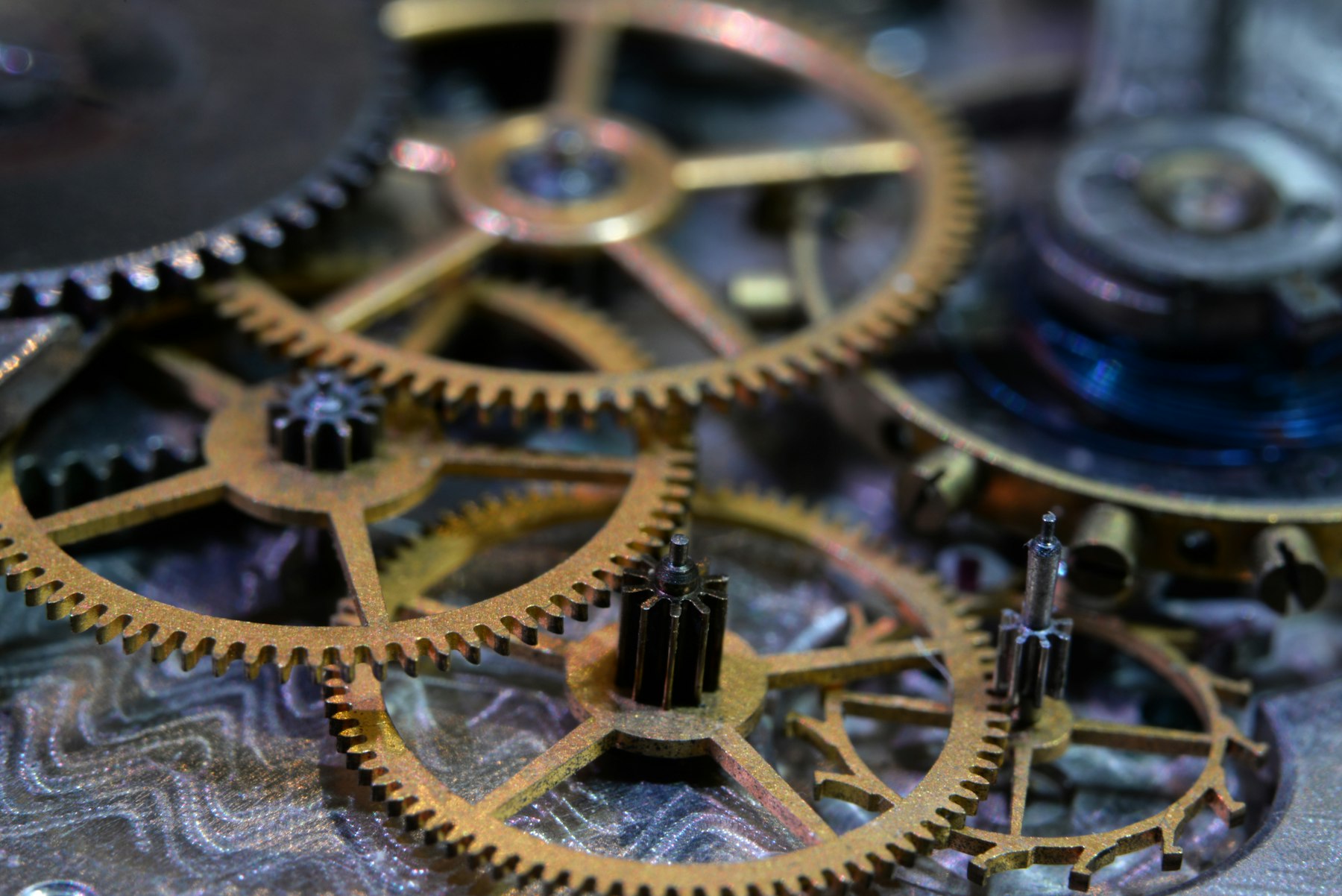
Every analog watch is driven by one of two kinds of engine. A quartz movement counts the vibrations of a tiny crystal and uses a battery to push the hands forward once a second. An automatic movement stores energy in a coiled spring, releases it through a train of gears and a swinging balance wheel, and rewinds itself as you move. The first is a piece of electronics, the second a piece of clockwork, and the choice between them shapes almost everything about owning a watch: how well it keeps time, what it costs to run, how it feels on the wrist and how long it will last.
Neither is better in the abstract. At the budgets this site covers, quartz is usually the rational buy and automatic the emotional one, and plenty of people end up owning both. This guide explains the difference in plain terms and helps you decide which belongs on your wrist first.
Inside a quartz watch sits a sliver of quartz crystal cut into the shape of a tiny tuning fork. When the battery sends current through it, the crystal vibrates at 32,768 times a second, a number chosen because it halves neatly down to one pulse per second. A small circuit counts those vibrations and, once every second, sends a pulse to a stepping motor that moves the gears and the hands. That is why the seconds hand on most quartz watches jumps rather than glides.
The first quartz wristwatch went on sale in Japan in 1969, and within about fifteen years the technology had upended the industry. It was cheaper to build, far more accurate and almost immune to the knocks that upset a mechanical watch. A typical quartz movement today drifts by somewhere around fifteen seconds a month, and better ones with temperature compensation are specified to within a few seconds a year.
The cost of entry is low and so is the cost of ownership. A battery change every two or three years is the main expense, and a well sealed quartz watch can go a decade or more without any other attention. The weak points are the battery itself, which can leak if a dead one is left inside for years, and the fact that a failed quartz module is usually swapped rather than repaired.
Price tracker · prices checked October 9, 2026
What one watch has cost over time, listed and per watch while the store ran its offer.
An automatic is a mechanical watch that winds itself. Its power comes from a mainspring, a long ribbon of alloy coiled inside a drum called the barrel. As the spring unwinds it turns a series of gears, and the escapement, the small mechanism that makes the ticking sound, lets that energy out in precise, equal steps. Those steps are timed by the balance wheel, a weighted ring that swings back and forth several times a second on a hair thin spring. Most affordable automatics beat at six or eight times per second, which is why the seconds hand appears to sweep.
The automatic part is a half moon shaped weight called the rotor. It pivots freely on the back of the movement, swinging with every movement of your arm and winding the mainspring through a set of reduction gears. Wear the watch all day and it stays topped up; leave it on a dresser and it will run down after its power reserve, typically around 40 hours on Japanese entry calibers and up to 80 hours on some newer Swiss ones. We cover the mechanism in more depth in how automatic watches work.
Mechanical accuracy is measured in seconds per day, not per month. Affordable Japanese automatics are commonly specified within roughly half a minute either way per day, Swiss entry calibers a little tighter, and in practice most run comfortably inside their spec. Position, temperature, how fully wound the spring is and how you wear the watch all nudge the rate. That is part of the character, and for some owners part of the charm.
| Quartz | Automatic | |
|---|---|---|
| Power source | Battery, changed every few years | Mainspring wound by a rotor as you wear it |
| Typical accuracy | Seconds per month | Seconds per day |
| Seconds hand | Jumps once a second | Sweeps in small steps |
| If left unworn | Keeps running | Stops after its power reserve, usually one to three days |
| Routine upkeep | Battery and gasket check | A full service every several years |
| Shock and magnetism | Very tolerant | More sensitive to hard knocks and strong magnets |
| Thickness | Can be very slim | Usually thicker, the rotor needs room |
| Price at the same design level | Lower | Higher, often by half or more |
If you judge a watch purely as a timekeeper, quartz wins and it is not close. An automatic that gains eight seconds a day will be about a minute fast after a week, and you will set it more often than you would ever set a quartz watch. If you rotate several watches you will be resetting them anyway, which is why many collectors stop caring.
A battery change at a jeweler or watch counter costs little, and you can do it yourself on many screw down or snap backs. An automatic needs its oils renewed and parts checked every five to ten years, and a full service on even a simple movement often costs more than the watch itself at this price level. The counterpoint is longevity: a mechanical movement can be serviced and kept running for generations, while an old quartz module is replaced when it fails.
This is where the automatic earns its place. The sweep of the seconds hand, the faint whir of the rotor when you shake your wrist, the sight of a balance wheel through an open dial: none of it is useful, all of it is the reason people love watches. Quartz feels like an appliance by comparison, a very good one.
The clearest way to see the price of a mechanical movement is to find a watch sold both ways. Tissot sells its integrated bracelet PRX in a quartz version, the Tissot PRX 40mm at $450, and an automatic version, the Tissot PRX Powermatic 80 40mm at $850. Same 40mm steel case, same general look, and the automatic costs close to twice as much. In return you get a sweeping hand, a movement with a power reserve of about 80 hours and a display caseback to watch it through. The quartz is thinner and keeps better time.
The same pattern runs through every price level. Among Japanese brands, the Seiko 5 Sports at $350 and the Citizen Tsuyosa at $495 are the automatics most buyers start with, both well regarded and both serviceable for years. A quartz watch with a comparable steel case and bracelet from those makers or from Timex, such as the Timex Q Continental 39mm at $179, costs noticeably less, and a simple quartz dress watch like the Casio MTP1302D Dress Watch costs under $100.
| Watch | Movement | Price* |
|---|---|---|
| Casio MTP1302D Dress Watch | Quartz | $89.95 |
| Timex Q Continental 39mm | Quartz | $179 |
| Seiko 5 Sports | Automatic | $350 |
| Citizen Tsuyosa | Automatic | $495 |
| Tissot PRX 40mm | Quartz | $450 |
| Tissot PRX Powermatic 80 40mm | Automatic | $850 |
*as listed on each brand's US website, October 2026
Below $200 the automatic option narrows to online brands. Lucky Fours, for example, sells most of its range with quartz movements, such as the Caspian at $79.99, and a handful of automatics: the Skeleton at $99.99, the Spine and Prince Oak at $149.99, and dive style automatics above that. The automatics are the only way in that catalogue to get a sweeping hand and a visible movement, and they cost more than the quartz models for exactly that reason.
WatchesUnder is owned by BlackRobin Capital Inc.
The two categories are not the whole story. A few variations are worth knowing before you shop.
The terms on dials and spec sheets can be confusing; our watch glossary defines the ones you are likely to meet.
Our honest default for a first watch is quartz, because it removes every reason not to wear it. For a second watch, an automatic is the most interesting next step, and buying one alongside a quartz piece is often where people discover which they actually prefer. If you are curious about the open dial look specifically, read skeleton watches: automatic or quartz, because some skeleton style dials hide a quartz movement behind decorative cutouts.
"Automatic means better quality." Not necessarily. A well made quartz watch from a good maker outlasts a poorly finished automatic, and the case, crystal and bracelet matter as much as the movement for daily wear.
"Quartz watches are disposable." Cheap ones often are; good ones are not. A sealed quartz watch with a decent case can run for decades with battery changes and the occasional new gasket.
"Automatics never need winding." They wind while worn. If you wear one only on weekends it will stop between wears, which is why some owners keep a winder or simply give the crown thirty or forty turns before putting it on.
"You can tell the movement from the price." Only roughly. Check the listing: the movement is almost always stated, and it is the single most useful line on a spec sheet.
Quartz, by a wide margin. A standard quartz watch drifts by roughly a few seconds a week, while an affordable automatic can gain or lose several seconds a day and still be running within its specification.
No. An automatic is powered by a mainspring that a weighted rotor winds as you move your arm. If you leave it off the wrist for a day or two it stops, and you restart it by winding the crown or giving it a gentle shake. Our guide to how automatic watches work goes through the mechanism.
Watch the seconds hand. A quartz hand jumps once a second; an automatic hand sweeps in small steps, several per second. An exhibition caseback or an open dial that shows a spinning rotor is another giveaway.
It can be, if you value the mechanism and accept that it needs wearing or winding and will run less precisely than quartz. If you just want a watch that tells good time and looks right, quartz is the more sensible buy at that price.
Typically two to three years in a simple three hand watch, often less in a chronograph that is run often. See how long a watch battery lasts for the details.
Michael Chen covers automatic watches, watch brands and Watch 101 for WatchesUnder: how movements work, how to size and care for a watch, and how the affordable brands compare. Prices in his guides are checked against each brand's own website.
Watch 101
Michael Chen·4 min read
Watch 101
Michael Chen·4 min read
Price Guides
Michael Chen·5 min read
Price Guides
Michael Chen·5 min read
We use cookies and similar technology to see which guides are read. When you arrive from an ad, we also pass the ad's click identifier to the store you visit from our links. You can accept or reject this, and change your choice any time under Cookie settings. Privacy policy
