
Watch Styles
The Best Skeleton Watches You Can Actually Afford
 Michael Chen·10 min read
Two skeleton watches can look almost identical in a photo and be completely different machines. Here is what sits behind each kind of open dial, how to spot the difference, and when the quartz version is the smarter buy.
Prices checked October 9, 2026Compared across brandsHow we choose
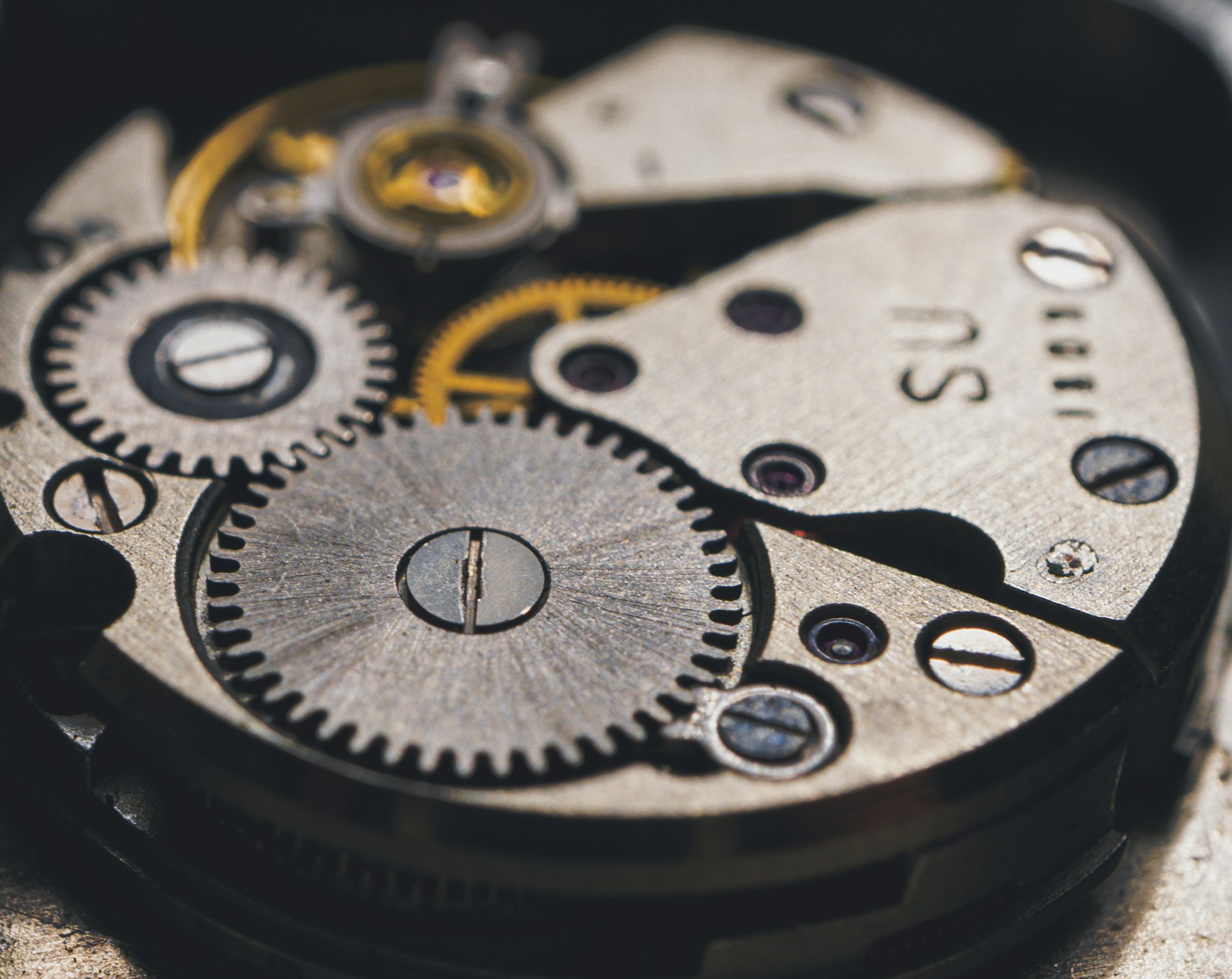
Here is a question we get more than any other about skeleton watches: two watches look the same in the photos, one says automatic and one says quartz, so does it matter? It does, and the reason is in what an open dial is for. A skeleton exists to show you the movement. Whether there is anything worth showing depends entirely on which kind of movement is inside.
An automatic watch is a small mechanical engine. A coiled mainspring stores energy, a train of gears releases it, and an escapement lets it out in tiny regular bursts governed by the balance wheel, a weighted ring on a hairspring that oscillates several times a second. A half moon shaped rotor on the back spins as your wrist moves and winds the mainspring, which is why the watch is called automatic. Our guide to how automatic watches work walks through every part.
Take the dial away and all of that is visible. You can watch the balance flicker, see wheels turning at different speeds and, on most designs, see the rotor through a display back. That living quality, the sense that the thing on your wrist is working, is why skeletons exist.
Watch Index · prices checked October 9, 2026
Every watch this guide mentions, ranked by Value Score or by what one watch costs today with each store's current offer counted.
A quartz movement is mostly electronics. A battery sends current through a tiny quartz crystal, which vibrates at a precise frequency; a circuit counts those vibrations and once a second pulses a stepping motor, which moves the hands. It is accurate and cheap to make, but almost none of it moves, and what does move is hidden under a plastic or metal cover.
So a quartz watch with an open dial has a problem: there is nothing mechanical to show. The usual solution is a decorative plate, shaped and printed or stamped to resemble gears and bridges, sitting behind a cut out dial. It reads as a skeleton in a photo. On the wrist, it is still, apart from the hands.
| Check | Automatic skeleton | Quartz skeleton look |
|---|---|---|
| Movement listed | Automatic, self winding or mechanical | Quartz, battery, or not stated |
| Balance wheel | Visible, swinging constantly | None |
| Seconds hand | Sweeps in small fast steps | Jumps once a second |
| Caseback | Usually glass, rotor visible | Often solid steel |
| Off the wrist | Stops after a day or two unless wound | Keeps running for a couple of years |
General characteristics; individual watches vary, so the stated movement is the final word.
The first check is the one that settles it. Every Lucky Fours listing states its movement, and so does every established brand. Where a seller leaves the movement out of a skeleton listing, assume quartz until told otherwise.
Lucky Fours sells both, and conveniently at the same price, which makes it a clean comparison.
The Lucky Fours Skeleton is listed as Automatic. It has a round steel case on a steel bracelet, an open centre showing the movement, and 7 colourways. It costs $99.99.
The Lucky Fours Summit is listed as Quartz. It has a tonneau case in rose gold tone on a blue rubber strap and a layered open look dial. It also costs $99.99, as does the white cased Draco, which is quartz too.
WatchesUnder is owned by BlackRobin Capital Inc.
Because the prices match, the choice is not about money. It is about what you want the watch to do. If the movement is the attraction, buy the automatic: you are not paying a cent more for it. If the barrel case and the colour are the attraction, the Summit and Draco are the only way to get that shape in this range, and quartz is part of the deal.
It would be easy to treat the quartz version as the lesser watch, but there are good reasons to choose it.
What the quartz version should not be is a watch you describe as automatic, or one you buy believing it is. That is the only real mistake in this category.
If you enjoy watches as machines, the automatic wins easily, and in this range it does so at no extra cost. There are three automatics with open dials in the Lucky Fours catalogue: the Skeleton, the angular Spine and the rubber strapped Prince Oak, the last two at $149.99. Our guide to the best skeleton watches compares all three with the established brand options, which start with the Bulova Sutton at $540.
Ownership is where the two differ most from day to day. With an automatic skeleton, wear it daily and it keeps itself wound; leave it off for a weekend and you will reset the time on Monday. Expect it to drift a little, and do not be alarmed if it runs a few seconds fast or slow each day. Over the years it will benefit from a service. With a quartz skeleton look, the routine is simply a battery every couple of years; see how long a watch battery lasts.
One small tip for automatics: when you pick one up after a few days off the wrist, turn the crown twenty or thirty times before setting the hands. That gives the mainspring enough energy to run reliably until your wrist takes over.
An automatic skeleton shows you a machine; a quartz skeleton shows you a picture of one. Both are legitimate purchases, as long as the label on the box matches what you think you are buying. In the Lucky Fours range they cost the same, which makes the decision unusually clean: buy the Skeleton, Spine or Prince Oak for the mechanism, and the Summit or Draco for the shape.
WatchesUnder is owned by BlackRobin Capital Inc.
It can have an open dial, but there is little to see: a quartz movement is a battery, a circuit, a crystal oscillator and a small stepping motor. Most quartz skeleton designs put a decorative plate behind the dial instead, so they are a skeleton look rather than a view of the mechanism.
Look for a balance wheel swinging back and forth, a rotor on the back that turns when you move the watch, and a seconds hand that sweeps in small steps. If the seconds hand jumps once a second and nothing on the dial moves, it is quartz.
Quartz, by a wide margin. An affordable automatic can drift several seconds a day; a quartz watch typically drifts a few seconds a month. See quartz vs automatic for the full comparison.
Over the long run, yes. Mechanical movements benefit from cleaning and oiling every several years. On an affordable automatic many owners simply wear it until it needs attention; a quartz watch needs a battery every couple of years instead.
Michael Chen covers automatic watches, watch brands and Watch 101 for WatchesUnder: how movements work, how to size and care for a watch, and how the affordable brands compare. Prices in his guides are checked against each brand's own website.
Watch Styles
Michael Chen·10 min read
Watch 101
Michael Chen·8 min read
Watch 101
Michael Chen·4 min read
Watch 101
Michael Chen·4 min read
We use cookies and similar technology to see which guides are read. When you arrive from an ad, we also pass the ad's click identifier to the store you visit from our links. You can accept or reject this, and change your choice any time under Cookie settings. Privacy policy
