Watch Styles
The Best Affordable Chronograph Watches
 Daniel Reyes·7 min read
A chronograph is a watch with a stopwatch built in. Here is what each pusher and subdial does, how to read a tachymeter, and the habits that keep the mechanism happy.
Prices checked October 9, 2026Compared across brandsHow we choose
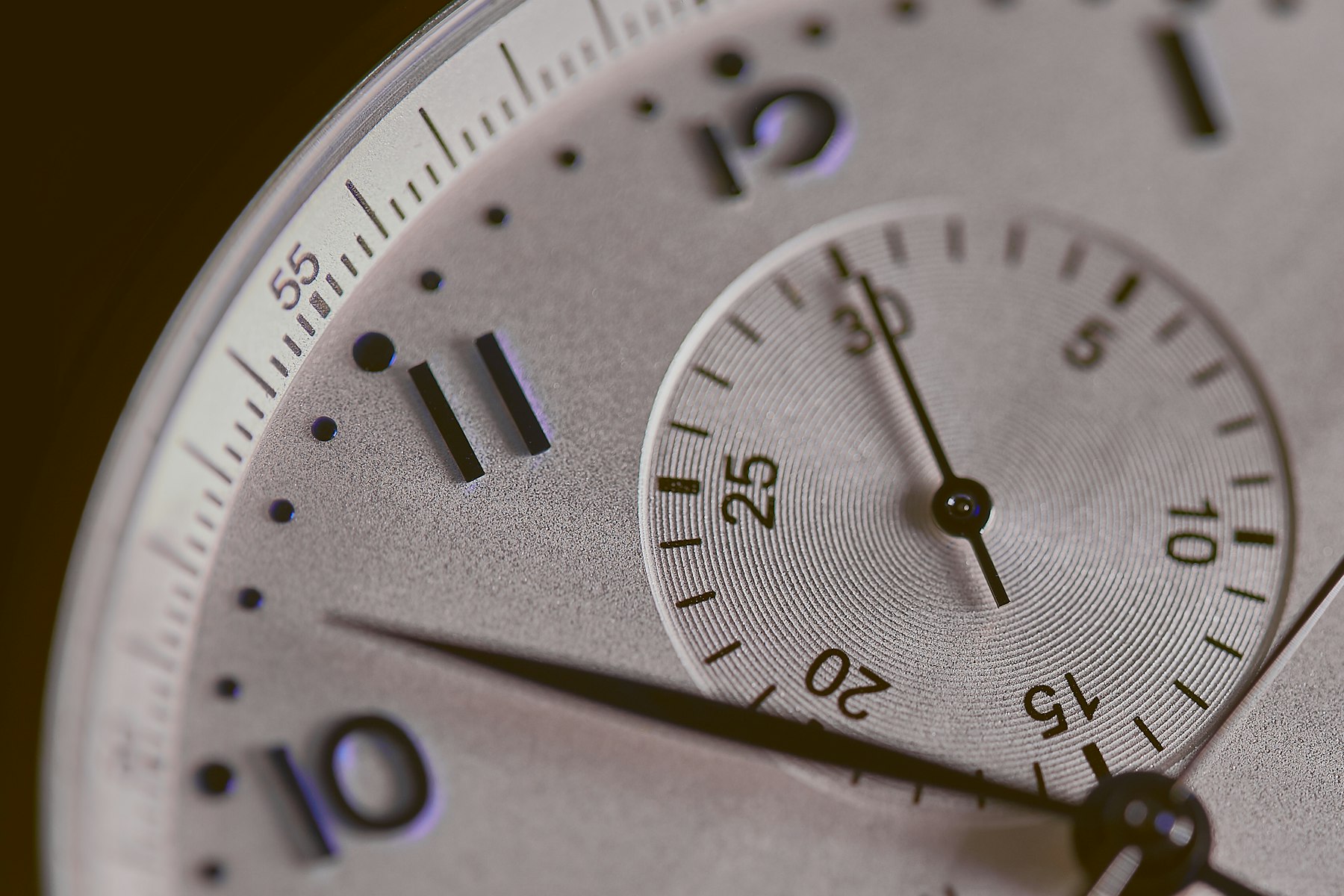
Put simply, a chronograph is a watch with a stopwatch built into it. The ordinary hands keep telling the time while a separate set of hands, started and stopped with buttons on the side of the case, measures how long something takes. The word comes from the Greek for "time writer", a leftover from the nineteenth century instruments that marked elapsed time with a dot of ink. Today it is the most popular complication in watchmaking after the date, and it accounts for a large share of the busy, sporty dials you see in any watch shop.
It also confuses people, because a chronograph dial carries more hands and scales than it seems to need. Once you know which hand belongs to which job, it becomes one of the most useful things a watch can do.
Almost every chronograph, from a drugstore quartz model to a five figure mechanical one, shares the same basic controls. Learn them once and you can pick up nearly any example and use it.
| Part | Usual position | What it does |
|---|---|---|
| Start and stop pusher | Above the crown, at 2 o'clock | Starts the stopwatch, stops it, and on most watches starts it again from where it paused |
| Reset pusher | Below the crown, at 4 o'clock | Returns every stopwatch hand to zero once the chronograph is stopped |
| Central seconds hand | From the middle of the dial | On a chronograph, usually the stopwatch seconds, not the running seconds |
| Minute counter | A subdial, often at 3 or 12 | Counts elapsed minutes, typically up to 30 |
| Hour counter | A subdial, often at 6 | Counts elapsed hours, typically up to 12 |
| Running seconds | A subdial, often at 9 | The watch's ordinary seconds, always ticking |
| Tachymeter | Printed on the bezel or dial edge | Converts a timed distance into an average speed |
Positions vary by movement; the instruction sheet for your watch is the final word.
The detail that trips most new owners is the big central hand. On a three hand watch it sweeps constantly. On a chronograph it usually sits still at twelve until you press start, and the small subdial at nine is the one showing that the watch is running. People regularly assume a new chronograph is broken for exactly this reason.
Price tracker · prices checked October 9, 2026
What one watch has cost over time, listed and per watch while the store ran its offer.
The routine takes about ten seconds to learn:
That last point matters most on mechanical watches. Pressing reset while the stopwatch is running asks the hammers that zero the hands to fight a moving wheel. Some movements are designed to tolerate it, many are not, and a repair costs more than the habit of stopping first.
Nobody needs a chronograph, which is part of the charm, but once you have one it finds jobs: parking meters, steeping tea, the length of a run, a presentation you were told to keep under twenty minutes, the time a child spends brushing their teeth. A rotating bezel does some of the same work, which we explain in what a dive bezel is for, but the chronograph is more precise and starts with one press.
The tachymeter is the scale of numbers running around the edge of a racing chronograph, usually starting near 400 or 500 at the top and falling toward 60. It turns time into speed over a known distance of one unit, whether that is a mile or a kilometer.
Start the chronograph as you pass a marker, stop it at the next one, and read the number the central hand points to on the scale. If a mile took 45 seconds, the hand points to 80, so you averaged 80 miles an hour. The scale is simply 3,600 divided by the elapsed seconds, printed in advance so you never do the arithmetic. It also works for production rates: time how long one unit takes and the scale gives you units per hour.
The limit is that the scale only covers events between roughly seven seconds and a minute. Anything slower than 60 units an hour runs off the end. That is why the tachymeter is more of a design signature than a daily tool, and why it defines the look we cover in our guide to racing chronographs.
Both do the same job; they get there differently.
A quartz chronograph uses small motors to drive the stopwatch hands. It is cheap to make, accurate, and thin enough to wear every day. The trade off is battery life, since every second the stopwatch runs costs a little power, and the hands can drift from zero after a hard knock, which a reset procedure fixes.
A mechanical chronograph adds dozens of parts to an already complex movement: a column wheel or cam that coordinates start, stop and reset, a clutch that connects the stopwatch to the running train, and the hammers that snap the hands back to zero. It is beautiful to watch through a display back and expensive to build, which is why the cheapest well known mechanical chronographs sit far above the quartz ones in price. If you are unsure which movement fits how you wear a watch, read quartz vs automatic first.
At budget prices there is a real distinction between a working chronograph and a chronograph look. Some inexpensive watches carry printed or decorative subdials that show the day, the date or a 24 hour scale instead of elapsed time, and the pushers on a few are dummies. Before you buy any chronograph under a few hundred dollars, read the listing for the word "stopwatch" or a description of what each subdial does, and look at the product photos for where the hands point.
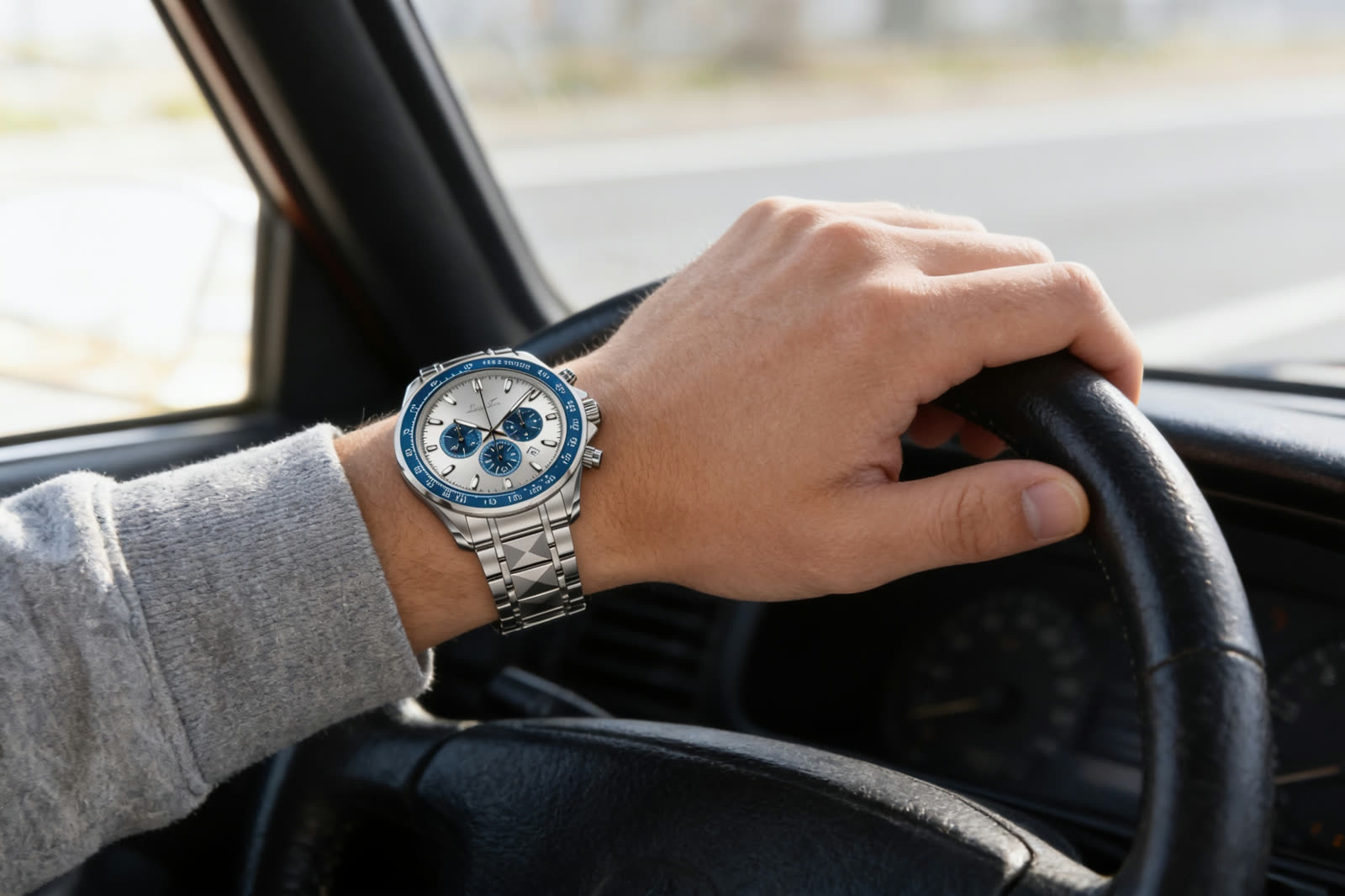
Among the established brands, the Casio Edifice Chronograph at $165 is a full quartz chronograph from a maker with a long record in the category, and the Citizen Promaster Dive Chronograph at $440 pairs a chronograph with a light powered movement. If what you want is the racing look on the wrist, a panda dial, a black tachymeter bezel and a steel bracelet, the Lucky Fours Vantage delivers that layout for less, and the Chronometer swaps the black bezel for a blue ring around a white dial.
WatchesUnder is owned by BlackRobin Capital Inc.
For the full field, from under $100 to the first serious mechanical pieces, our guide to the best affordable chronographs sorts them by budget and by what each one actually times.
A chronograph is a stopwatch function. A chronometer is a watch whose movement has passed a formal precision certification. A watch can be one, both or neither, and some brands use either word simply as a model name, so read the specifications rather than the dial.
Yes. Running the stopwatch powers extra hands, so a quartz chronograph left running all the time will need a new battery sooner. See how long a watch battery lasts.
After a knock or a battery change, a quartz chronograph can lose its zero position. Most have a reset procedure using the crown and pushers; the exact steps differ by movement, so follow the instruction sheet for your watch.
On most modern movements it does no harm, but it does use some of the power reserve. Older and cheaper designs wear faster when run constantly, so many owners only start it when they need it.

Michael Chen covers automatic watches, watch brands and Watch 101 for WatchesUnder: how movements work, how to size and care for a watch, and how the affordable brands compare. Prices in his guides are checked against each brand's own website.
Watch Styles
Daniel Reyes·7 min read
Watch Styles
Daniel Reyes·6 min read

Look Expensive
Daniel Reyes·4 min read
Watch 101
Michael Chen·6 min read
We use cookies and similar technology to see which guides are read. When you arrive from an ad, we also pass the ad's click identifier to the store you visit from our links. You can accept or reject this, and change your choice any time under Cookie settings. Privacy policy
