
Watch Styles
Dive Style Watches Explained: Looks vs Ratings
 Michael Chen·5 min read
The rotating ring on a dive watch is a simple, foolproof timer. Here is how it works, why it only turns one way, and how to use it for anything from a dive to a parking meter.

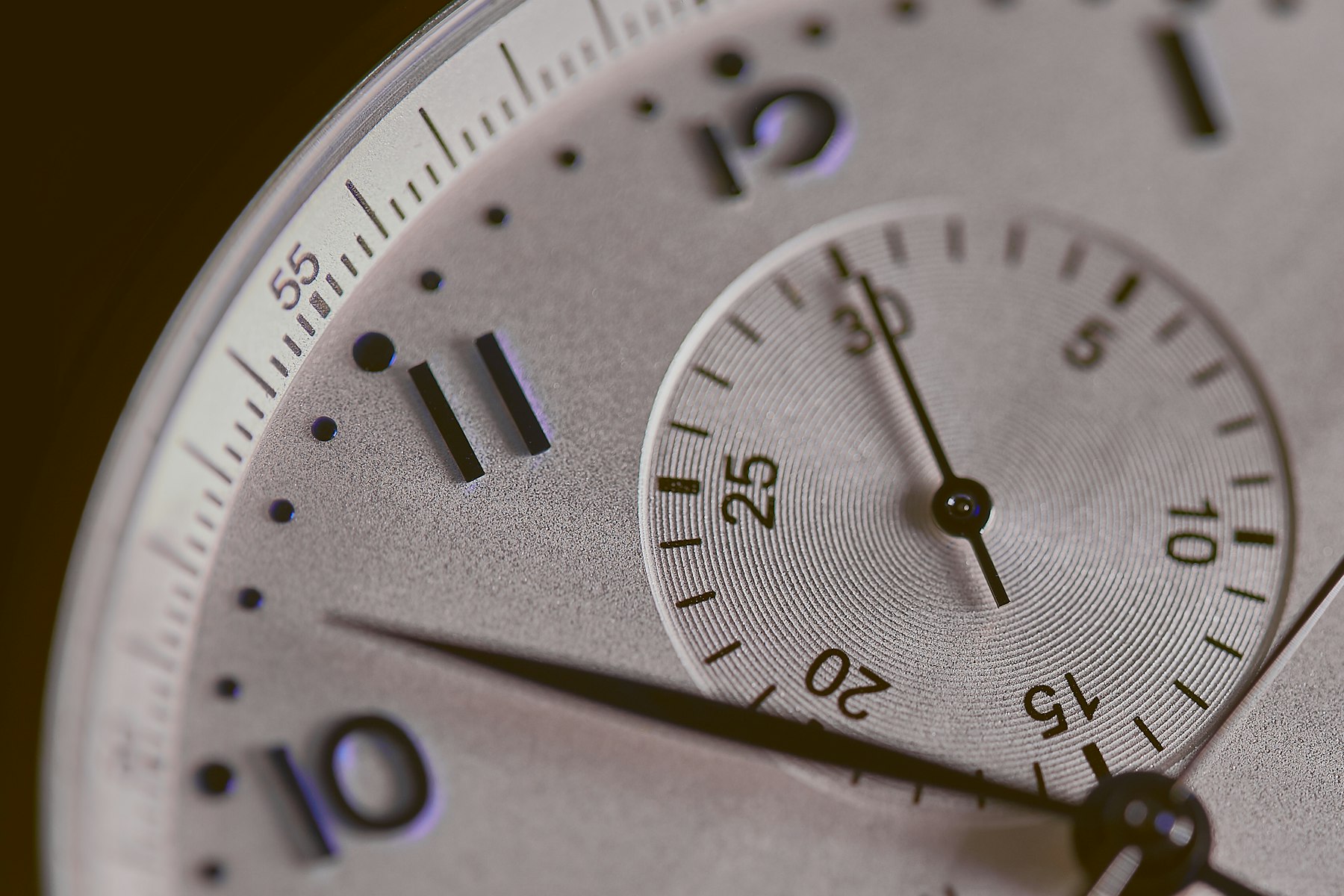
Look at almost any dive watch and the first thing you notice is the thick ring around the crystal, numbered 10, 20, 30 and onward, with a triangle at the top. It is called a dive bezel, and it is one of the cleverest pieces of low technology in watchmaking: a mechanical timer with no buttons, no battery and nothing to set except one turn of the wrist.
It was designed for divers in the 1950s, when the only way to know how much air remained in a tank was to know how long you had been breathing from it. The same principle works for anything with a time limit, which is why plenty of owners who never get wet use theirs every day.
A standard dive bezel carries a 60 minute scale that matches the minute track on the dial. The parts are consistent across nearly every maker:
Inside, a spring and a toothed ring make the bezel click into position, usually at every minute or half minute. That is why it holds its place when you knock it against a doorframe.
There is only one procedure, and it takes two seconds:
You do not need to remember the time you started, and you cannot forget to stop anything, because the bezel is not running. It simply records where the minute hand was. For periods longer than an hour you need to count the laps yourself, which is the main limitation.
A dive bezel counts up by design. To use it as a reminder, for example a parking meter with forty minutes left, turn the zero marker to sit forty minutes ahead of the minute hand instead. When the minute hand reaches the triangle, time is up. On a unidirectional bezel this takes most of a full turn, but it works.
A diver uses the bezel to know how long they have been underwater. If the bezel could slip clockwise, a bump against a rock would make it look as though less time had passed, and the diver might stay down too long. A bezel that can only move counterclockwise fails safe: a knock can only make elapsed time look longer than it really is, so the worst case is surfacing early.
That is why the unidirectional bezel became the standard for proper dive watches. Bidirectional bezels exist, often on pilot and travel watches, where a 24 hour or 12 hour scale is used to show a second time zone and turning both ways is more convenient. We cover that use in what a GMT watch is.
Once you start using a dive bezel you notice how many short intervals a day contains. Some of the jobs it does well:
For timing in seconds a chronograph is the better tool, but for minutes the bezel is quicker, silent and never needs resetting.
Turn a few in a shop and the differences become obvious. A good one:
A dive bezel on its own does not make a dive watch. Real dive watches are built and rated for the job: a stated water resistance rating, a screw down crown, a dial readable in the dark and a case designed to take knocks. The international standard for divers' watches, ISO 6425, sets out these requirements in detail, and watches that meet it say so on the dial or in the specifications.
Many watches carry a rotating bezel purely for the look, and that is fine for a desk and a weekend. If you actually plan to swim or dive, buy on the published rating, not the bezel. The Seiko 5 Sports at $350, the Citizen Promaster Dive Chronograph at $440 and the Tissot Seastar 1000 40mm at $515 all list their water resistance on the brand's own pages, which is where you should check it. Our guide to the best dive watches under $500 compares the rated options, and common watch care mistakes explains how to keep a diver sealed once you own one.
So that an accidental knock can only make the remaining time look shorter, never longer. A diver who misreads it surfaces early rather than late.
That is the zero marker, usually with a luminous pip so it can be found in the dark. You line it up with the minute hand to start timing.
No. The bezel is one feature among several. A real dive watch is defined by its rated water resistance, legibility in the dark and robustness. Many watches have the bezel for its look. See dive style watches explained.
Most have 60 or 120 clicks per full turn, one or two per minute. What matters more is that each click is firm and the bezel does not wobble or slip between positions.
Michael Chen covers automatic watches, watch brands and Watch 101 for WatchesUnder: how movements work, how to size and care for a watch, and how the affordable brands compare. Prices in his guides are checked against each brand's own website.
Watch Styles
Michael Chen·5 min read

Price Guides
Michael Chen·6 min read
Watch 101
Michael Chen·6 min read
Watch 101
Michael Chen·6 min read
We use cookies and similar technology to see which guides are read. When you arrive from an ad, we also pass the ad's click identifier to the store you visit from our links. You can accept or reject this, and change your choice any time under Cookie settings. Privacy policy