
Watch 101
The Watch Glossary: Terms From A to Z
 Michael Chen·10 min read
A watch is a few dozen visible parts around a few hundred hidden ones. This tour works from the outside in, naming each part, what it does and what it tells you about the watch in front of you.
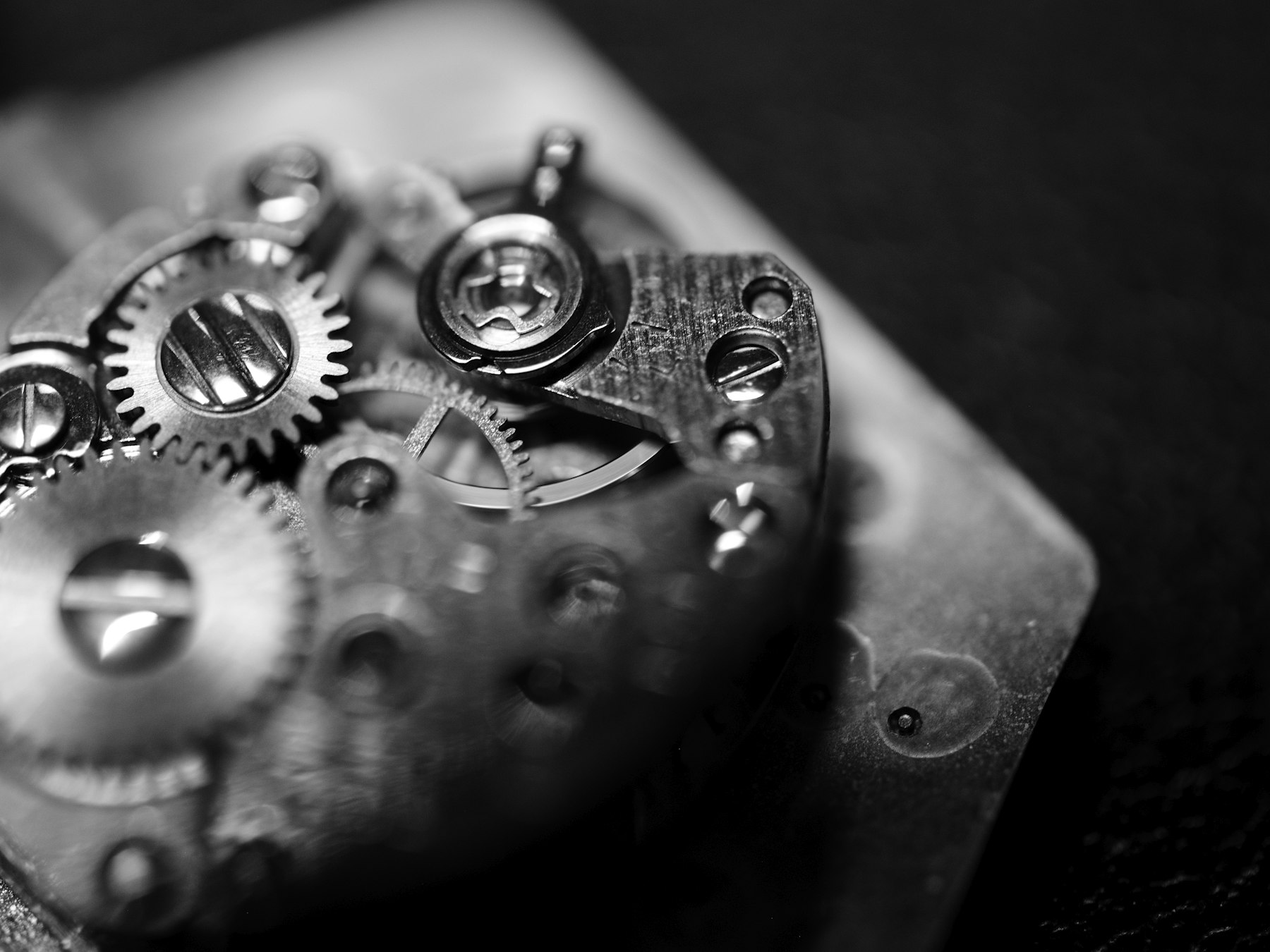
Knowing the parts of a watch is not about trivia. It is what lets you read a listing, compare two watches that look alike in photos, and explain to a repair counter exactly what is wrong. The vocabulary is small, and most of it follows the structure of the object: a case that protects, a dial that displays, a movement that drives, and a band that attaches. We will go through them in that order. For shorter definitions of these and many more terms, keep our watch glossary open alongside.
The case is the housing. Everything else is mounted in or on it, and its shape and size decide most of how a watch looks and wears. Most cases are machined from stainless steel; gold tone, black and rose gold tone versions are usually steel with a surface finish.
| Part | Where it is | What it does |
|---|---|---|
| Case middle | The central body | Holds the movement; its outline gives the watch its shape |
| Bezel | The ring around the crystal | Frames the dial; may rotate or carry a scale |
| Crystal | Over the dial | The transparent cover protecting the dial and hands |
| Crown | Usually at 3 o'clock | Sets the time and date; winds a mechanical watch |
| Pushers | Either side of the crown | Operate a chronograph or other function |
| Lugs | Top and bottom corners | Hold the strap or bracelet |
| Caseback | The underside | Closes the case; solid or with a window |
The bezel can be purely decorative, a polished ring or a fluted one with fine vertical ridges, or functional. A rotating bezel with a minute scale is used to time intervals, a two color 24 hour scale tracks a second time zone, and a tachymeter scale converts elapsed time into speed. Some bezels are fixed with visible screws, an industrial detail on octagonal designs. If a bezel turns, check whether it turns one way (typical of dive style watches) or both ways, and whether it clicks firmly into each position. We explain the timing use in what is a dive bezel.
Three materials dominate. Acrylic is light, warm looking and easy to buff, but scratches readily. Mineral glass is harder and common on affordable watches. Synthetic corundum crystal is the hardest of the three and the most scratch resistant, at a higher cost. Some crystals carry an anti reflective coating, and some have a small magnifying bubble over the date. The glossary entry for crystal lists the trade offs.
The crown usually has several positions. Pushed in, it does nothing or winds the watch; pulled to the first position it sets the date on most date watches; pulled fully out it sets the time. A screw down crown must be unscrewed before it will pull out, and screwing it back is what seals the case. Crown guards are the shoulders of metal on either side that protect it from knocks. Chronograph pushers sit at 2 and 4 o'clock: the top one starts and stops, the bottom one resets.
Lugs come straight, curved or faceted, and their length is what makes a watch fit or overhang a wrist; see how to choose the right watch size. On an integrated design there are no separate lugs at all: the bracelet joins the case directly. The caseback can be a solid steel plate, often engraved with model details, or a display back with a window that shows the movement. It is held by screws, a threaded ring or a press fit.

The dial is the face, and it carries most of a watch's personality. Its surface can be flat and matte, sunray brushed so light sweeps across it, textured in a grid or ribbed pattern, or open to show the movement beneath.
Read the subdials on a chronograph carefully: one of them is usually the running seconds of the watch itself, which is why the large center seconds hand on a chronograph stays still until you start the timer. What is a chronograph explains how to use them.
The movement, also called the caliber, is the engine. There are two families, and they share almost no parts.
On an open or skeleton dial, the balance wheel is the part you see moving fastest. On a display caseback, the rotor is the half circle that turns when you tilt the watch. For the full sequence, read how automatic watches work.
Whatever holds the watch on is attached to the lugs by spring bars, small sprung rods that click into holes on the inside of each lug, or on an integrated bracelet by a fixed first link shaped to the case.
| Part | What it is |
|---|---|
| End link | The first link of a bracelet, shaped to meet the case. Solid end links feel sturdier than folded ones. |
| Links | The repeating sections. Three link and five link designs are most common; removable ones carry small arrows. |
| Pins or screws | Hold the links together; removed to shorten the bracelet. |
| Clasp | Closes the bracelet. Folding clasps with a safety catch are the norm; butterfly clasps open from the center. |
| Micro adjustment | Small holes or a slide inside the clasp for fine tuning length without removing links. |
| Buckle and keeper | On a strap, the pin buckle and the loop that holds the strap's tail. |
The width between the lugs, measured in millimeters, decides which straps fit. A bracelet's taper, how much it narrows from case to clasp, changes how elegant it looks. If you are choosing between the two, bracelet or strap covers comfort, sizing and looks.
A listing that names the case material, crystal type, movement and lug width tells you most of what you need. Photos tell you the rest: look for crisp edges where brushed and polished surfaces meet on the case, applied rather than printed indices, hands that reach their markers, and end links that sit flush against the case. Those four details separate a well made watch from a merely good looking one at any price.
The case, which holds everything; the crystal over the dial; the dial and hands that show the time; the crown used to set it; the movement inside that drives it; and the strap or bracelet that holds it on your wrist.
The crown, the knob on the side of the case, used to set the time and date and, on mechanical watches, to wind the mainspring. A ring around the dial that turns is the rotating bezel.
On a chronograph they are pushers, which start, stop and reset the stopwatch. On some watches a small recessed button is a corrector, used to adjust the date or another display with a tool.
The movement: either a quartz module with a battery, a crystal oscillator, a circuit and a small motor, or a mechanical movement with a mainspring, gear train, escapement and balance wheel. Our guide to quartz vs automatic compares the two.
Michael Chen covers automatic watches, watch brands and Watch 101 for WatchesUnder: how movements work, how to size and care for a watch, and how the affordable brands compare. Prices in his guides are checked against each brand's own website.
Watch 101
Michael Chen·10 min read
Watch 101
Michael Chen·8 min read
Watch 101
Michael Chen·6 min read

Watch 101
Michael Chen·5 min read
We use cookies and similar technology to see which guides are read. When you arrive from an ad, we also pass the ad's click identifier to the store you visit from our links. You can accept or reject this, and change your choice any time under Cookie settings. Privacy policy